
Basta la parola: possesso
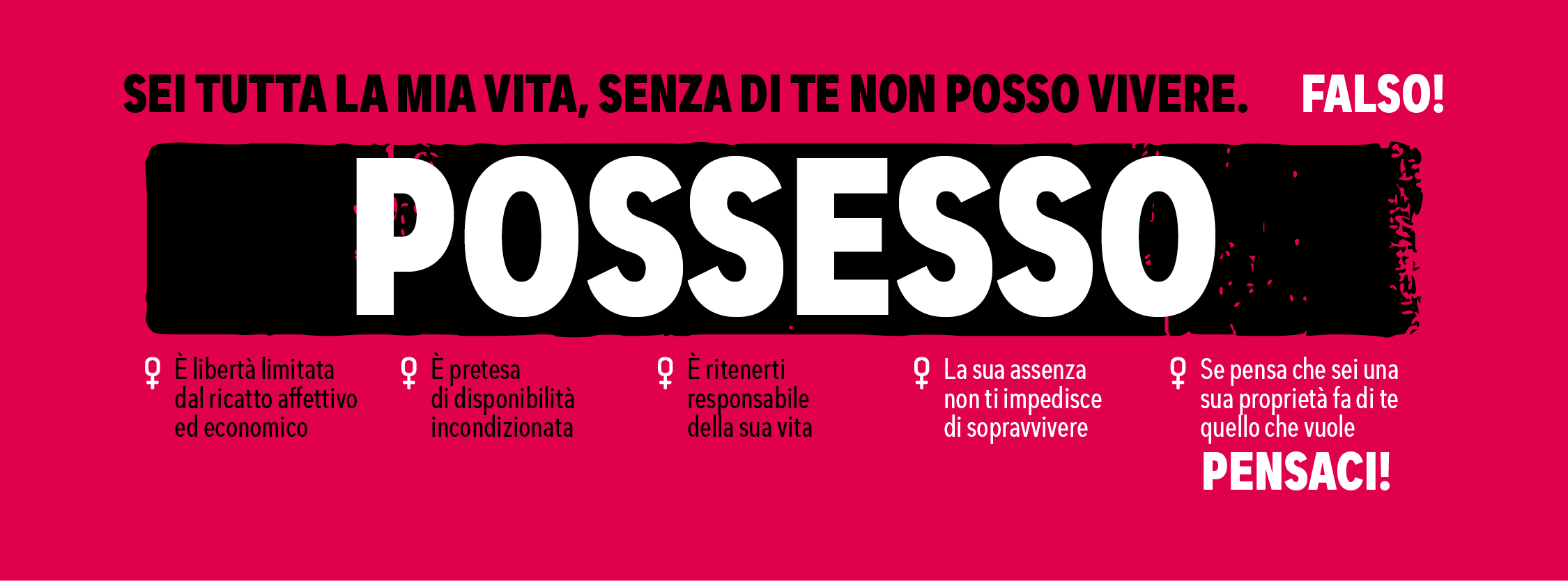
Possesso
Possedere qualcosa significa disporne liberamente ed esercitare un diritto. Per il Diritto italiano possesso vale titolo anche se chi è venuto in possesso di un bene è in mala fede. In altre parole se si è venuti in possesso di un bene è come se ne fossi proprietario/a. Si parla di bene, di oggetti.
Non si possiede una persona. Non si possiede una donna. Non è previsto dal diritto, non è previsto dall’etica. Le donne non sono beni né oggetti. Eppure il possesso è quello che gli uomini esercitano o pretendono di esercitare nella relazione con le donne. Lo trovano “normale”.
Le parole che si usano non sono mai casuali. Rivelano e spesso costruiscono realtà. Il possesso definisce il rapporto di potere esercitato dall’uomo sulla donna, la pretesa di stabilire e agire il dominio e la sopraffazione nell’ ambito di una relazione.
“Possedere” infatti è un termine che gli uomini usano quando si parla di rapporti sessuali, consensuali o non consensuali. Espressioni come “tu sei solo mia” oppure “non puoi essere di nessun altro” o ancora “l’ho posseduta”, “l’ho presa” indicano una disponibilità incondizionata e, appunto di dominio. Dominio da “dominus”, padrone. Il padrone è proprietario.
La pretesa maschile del possesso si traduce in controllo, limitazione della autonomia e dell’ autodeterminazione. Si esprime nei comportamenti che ne tracciano il perimetro e ne assicurano il mantenimento: minacce, violenza fisica, psicologica e sessuale, isolamento, privazione economica e relazionale. La gelosia come sentimento che spesso si invoca a giustificazione di condotte restrittive o violente verso la partner è l’espressione della pretesa di possesso nei suoi confronti.
Quando la donna osa sottrarsi a questa dinamica relazionale mette in discussione il potere maschile. Per molti uomini è intollerabile subirne la perdita. Se accade, sono determinati a ristabilire il predominio nel rapporto, tramite condotte violente, persecutorie, di “vendetta” sessuale fino al compimento dell’atto estremo, il femminicidio.
La cultura del possesso fa leva su una concezione sociale della relazione tra i sessi deviata che interpreta la libertà e l’autodeterminazione della donna come una minaccia al predominio maschile nella coppia e nella società.
Una concezione “normalizzata” che affonda le sue radici nel sistema patriarcale, che nega la donna come soggetto di diritti e libera di scegliere e di decidere.
La gelosia e il controllo NON sono amore.
La violenza sulle donne è un fenomeno culturale non di ordine pubblico. Il suo efficace contrasto non può consistere solo nella risposta giudiziaria securitaria. Occorrono politiche concrete di prevenzione fondate sulla diffusione di una cultura paritaria e di rispetto che regoli le relazioni tra i sessi.
Dietro la violenza non c’è mai amore.
Possession
To own something means to have free disposal of it as well as a right to it. Under Italian Law possession stands even if the person who came into possession of a property has bad intentions. In other words if you come into possession of a property it is as if you were the owner. We are talking about property, objects.
You cannot own a person. You cannot own a woman. It is not permitted by the law, nor by ethics. Women are not goods nor objects. Yet possession is what men exercise or claim to exercise in their relationships with women. They find it “normal”.
The words that they use are never random. They often reveal and build realities. Possession defines the power dynamic of men on women, the claim to establish and act upon domination and oppression within the relationship.
As a matter of fact “to own” is a verb that men use when talking about sexual relations, whether they are consensual or non-consensual. Expressions such as “you are mine”, or “you cannot belong to anyone else” or even “I claimed her”, “I took her” indicate an unconditional availability and, precisely, domination. Domination from the latin “dominus” which means master. The master is the owner.
The male claim to possession translates into control, limitation of autonomy and self-determination. It is expressed in behaviours that mark its boundaries and ensure its maintenance: threats, physical, psychological and sexual violence, isolation, and last but not least economic and relational deprivation. Jealousy, a feeling often summoned to justify restrictive or violent beviour patterns towards the partner is the concrete expression of the possesion over the woman.
When the woman dares to remove herself from this relationship dynamic she is challenging the male power. For many men, suffering this loss is intolerable. If it happens, they are determined to re-establish dominance within the relationship throught violent, persecutory behaviour and sexual “revenge” to the point of committing feminicide.
Possession culture is built on a distorted social conception of the relationship between the sexes which sees the women’s freedom and self-determination as a threat to male dominance within couples and society.
It is a “normalised” concept so deeply rooted in the patriarchal system that denies women their rights and freedom to choose and decide.
Jealousy and control are NOT love.
Violence against women is a cultural phenomenon, not a matter of public order. Its effective counteraction cannot consist solely of a judicial response focused on security. Concrete prevention policies are needed, and they must be built on a culture that raises awareness on equality and respect and that regulates relations between the sexes.
There is never love behind violence.
**الامتلاك**
امتلاك الشيء يعني أن تملكه وتتصرف فيه بحرّية وتمارس حقّ عليه. وفي القانون الإيطالي تعتَبَر الحيازة سندًا للملكية حتى لو كان الشخص الذي استحوذ على الشيء سيئَ النيّة. وبعبارة أخرى، إذا امتلكت أصلا فأنت مالكَه. الحديث هنا عن الأملاك، وعن الأشياء المادية.
لا يمكن امتلاكُ شخص. لا يمكن امتلاكُ امرأة. فهذا أمر غير منصوص عليه في القانون ولا تقرّه الأخلاق. فالنساء لسنَ ممتلكات ولا أشياء.
ومع ذلك، فالامتلاك هو ما يمارسه الرجال على النساء أو يدّعون حقّ ممارسته في علاقتهم بعهن. بحيث يعتبرونه أمرًا “طبيعيًا
الكلمات التي تستخدم ليست عفوية، فهي غالبا ما تكشف أو تنشئ واقعا معيّنا. الامتلاك يحدّد علاقة السلطة التي يمارسها الرجل على المرأة، ويجعله يزعم ترسيخ الهيمنة والقمع داخل العلاقة
كلمة “امتلاك” هي مصطلح يستخدمه الرجال في حديثهم عن العلاقات الجنسية، سواء كانت رضائية أو غير رضائية. عبارات مثل: “أنتِ لي وحدي”، أو “لا يمكنكِ أن تكوني لغيري”، أو “امتلكتُها”، “أخذتُها”، عبارات تدلّ على إتاحة وهيمنة غير مشروطة، بمعنى آخر الامتلاك. الامتلاك ينبثق من" الملك" المالك. والسيد هو المالك.
الادعاء الذكوري بالامتلاك يتجسد في التحكم وتقييد الحرية وسلب القدرة على اتخاذ القرار. ويتجلى في السلوكيات التي ترسم الحدود وتضمن استمراره: التهديدات، العنف الجسدي والنفسي والجنسي، والعزل، والحرمان الاقتصادي وتحديد العلاقات الإجماعية. الغيرة كإحساس غالبا ما تُستخدم لتبرير سلوكيات تقييدية أو عنيفة تجاه الشريكة وهي تعبير مباشر عن هذا الادعاء بالامتلاك في حقها.
وعندما تتتجرأ المرأة على كسر هذه الديناميكية، فهي تضع السلطة الذكورية في موضع التساؤل. بالنسبة لكثير من الرجال، الخسارة لا تطاق. وإن حدثت، فإنهم يسعون لاستعادة سلطتهم داخل العلاقة، من خلال سلوكيات عنيفة، مُطاردة، أو “انتقام” جنسي، وصولًا إلى الفعل الأكثر تطرفًا: قتل النساء -الفيميسيد
إن ثقافة الامتلاك تستند على رؤية اجتماعية مشوهة للعلاقة بين الجنسين، تعتبر حرية المرأة وحقها في تقرير مصيرها تهديدأ للهيمنة الذكورية داخل العلاقة و داخل المجتمع
تصور “مُطبع” متجذر في النظام الأبوي الذي ينكر المرأة كصاحبة حق، حرة في اختياراتها وقراراتها
الغيرة والسيطرة ليستا حبًا
العنف ضد النساء هو ظاهرة ثقافية وليست قضية أمن عام. ومواجهته بفعالية لا يمكن أن تكون فقط من خلال الرد القضائي الأمني. بل يتطلب سياسات وقائية ملموسة قائمة على نشر ثقافة المساواة والاحترام التي تنظم العلاقات بين الجنسين
فخلف العنف لا يوجد حبّ